How Much Hearing Aid Gain Is Right for Your Hearing Loss
When choosing a hearing aid, many people ask a crucial question:
“My hearing loss is 40 decibels; how much gain do I need to be properly fitted?”
This is a very important question, but the answer is not a simple number.
This is because hearing aid gain isn't as simple as a "one-to-one compensation"—meaning you don't just add back exactly the amount of sound you've lost.
This article will help you gain a complete understanding of the following:
What hearing aid gain is
Rough estimates of how much gain is needed for different degrees of hearing loss
Why you cannot simply "match your loss to a specific number"
How to choose the hearing aid that is best suited for you
What is Hearing Aid Gain?
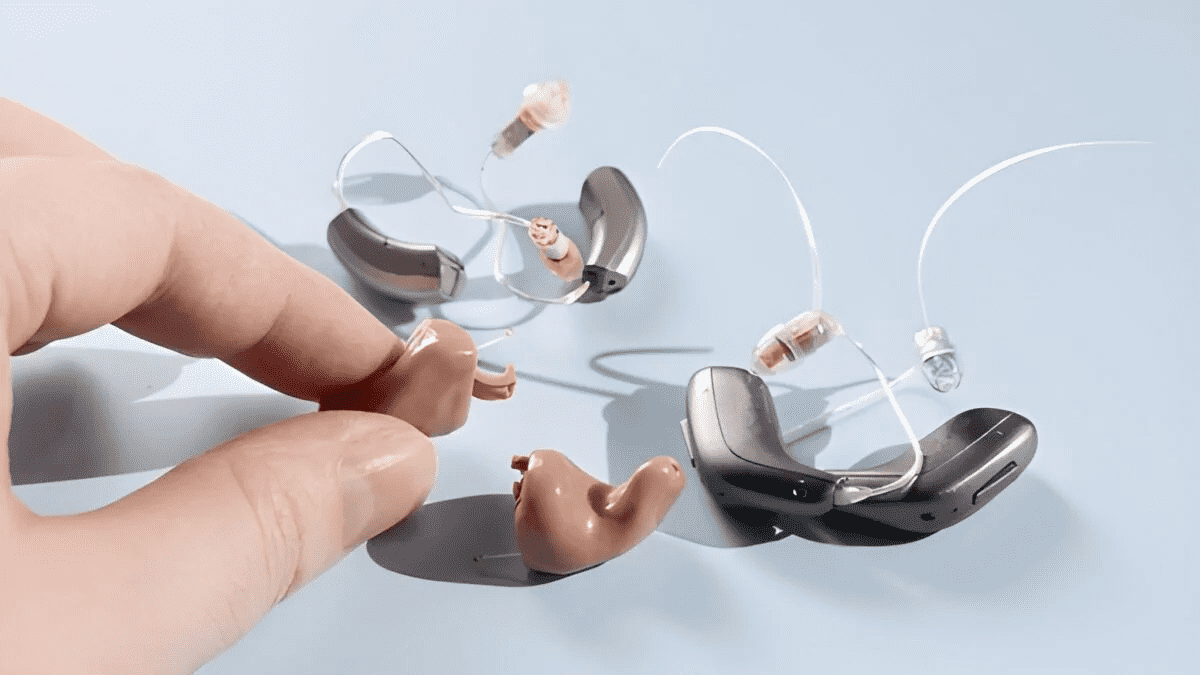
Hearing aid gain refers to the degree to which a hearing aid amplifies sound (measured in decibels, or dB).
Simply put:
Hearing Loss = The sound you cannot hear
Gain = The sound the hearing aid restores for you
For example:
If you have a hearing loss of 40 dB, the hearing aid typically needs to provide approximately 20–30 dB of gain.
Note: This is merely a reference range.
Gain Ranges Corresponding to Different Degrees of Hearing Loss (Reference Table)
Below is a common empirical reference guide:
Degree of Hearing Loss | Hearing Threshold Range (dB HL) | Recommended Gain Range
Mild Hearing Loss | 26–40 dB | 10–20 dB
Moderate Hearing Loss | 41–60 dB | 20–35 dB
Severe Hearing Loss | 61–80 dB | 35–50 dB
So, can we simply select a hearing aid based solely on this table? Before making a purchase, there is additional information you need to understand:
Hearing loss is not a single number, but rather a curve.
Everyone's hearing profile is unique:
Some people have poor low-frequency hearing.
Some people have poor high-frequency hearing (this is the most common type).
Some people have different degrees of hearing loss in each ear.
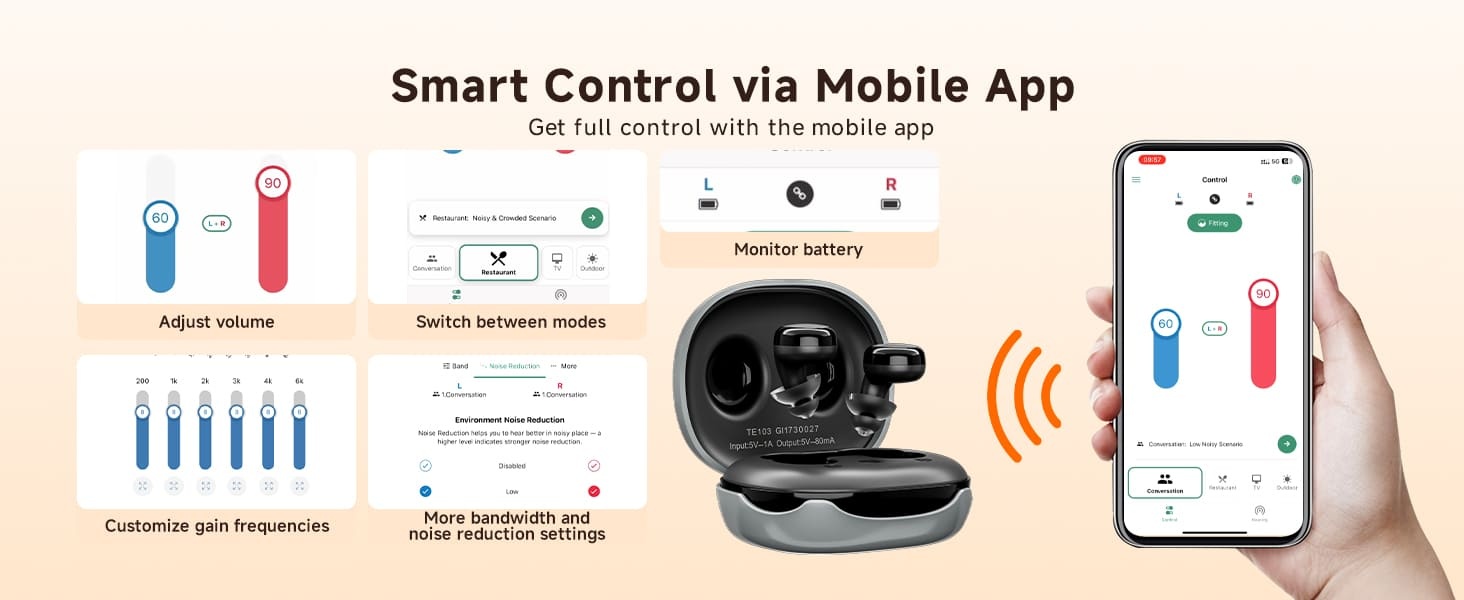
Therefore: Hearing aids require gain adjustments across specific frequency bands, rather than simply amplifying all sounds uniformly. In cases of uncommon, low-frequency hearing deficits, individuals may struggle to clearly perceive low-pitched sounds encountered in daily life—such as male baritone voices, the sound of wind, double basses, or bass guitars. For more complex cases of hearing loss, one can opt for hearing aids that support the input of an audiogram and feature self-fitting capabilities, allowing users to adjust the gain intensity across different frequency bands according to their specific needs. For instance, the TE103 hearing aid supports self-fitting, allows for adjustments via a dedicated mobile app, and offers six distinct volume levels.
Pay Attention to the "Loudness Recruitment" Phenomenon
A common characteristic of hearing loss is:
Soft sounds are inaudible;
Yet, slightly louder sounds feel uncomfortably loud.
Therefore, a hearing aid must:
Amplify soft sounds more significantly;
And keep loud sounds within a comfortable range.
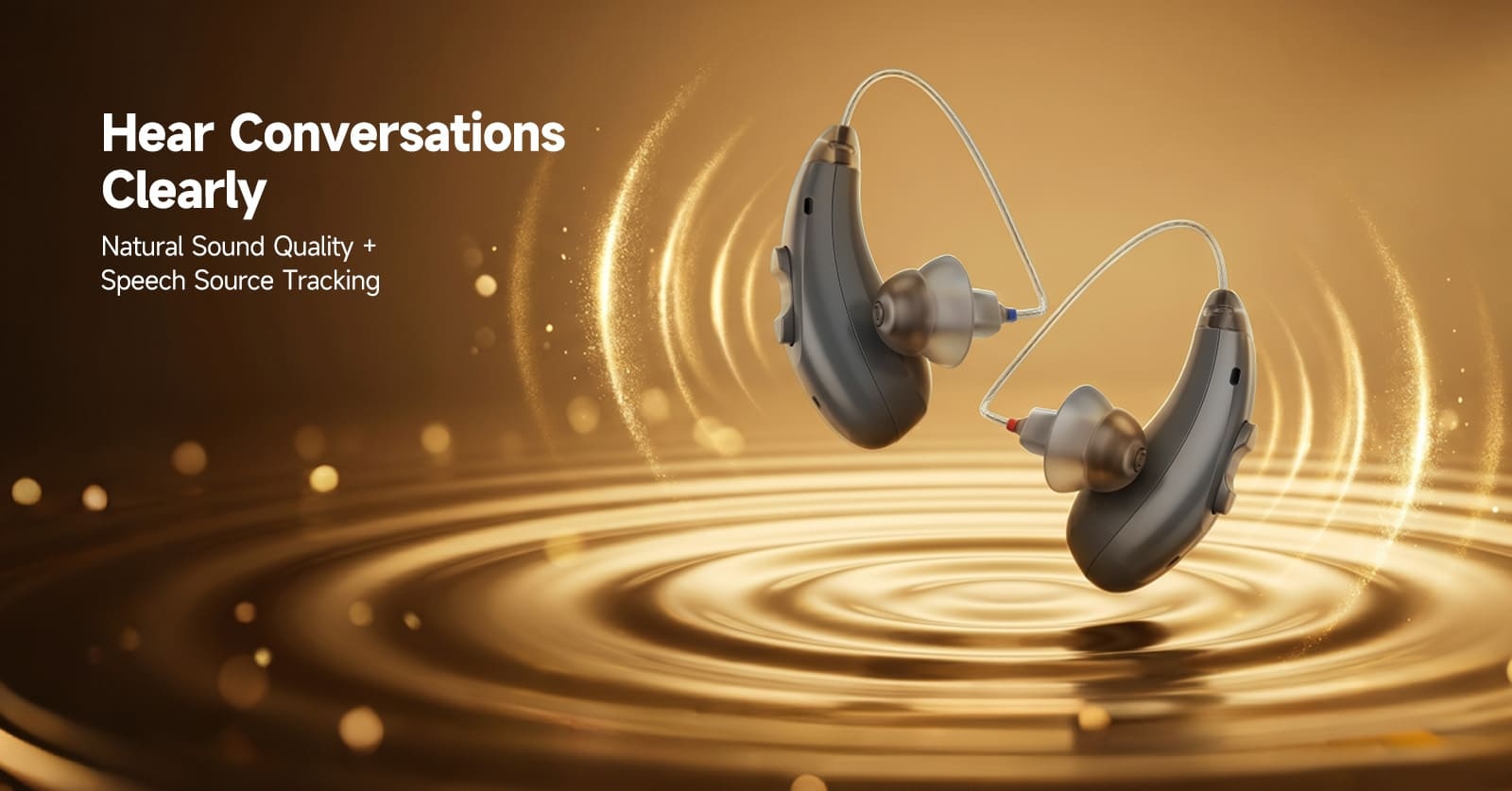
This requires the hearing aid to feature Wide Dynamic Range Compression (WDRC). The TE105 IP68 waterproof hearing aid suitable for mild to moderate hearing loss—is equipped with 16-channel WDRC technology. This feature effectively minimizes sound distortion, prevents sudden and jarring increases in volume for the wearer, and significantly enhances overall listening comfort.
How Do You Choose the Right Hearing Aid for You?
Step 1: Determine your specific hearing range.
Step 2: Select a hearing aid that supports "multi-channel adjustment."
This enables:
Frequency-specific optimization;
And enhanced listening comfort.
The TE201 (RIC model), TE105 (RIC model), and TE103 (CIC model) hearing aids all feature multi-channel technology and offer four distinct hearing assistance modes to help you adapt to a variety of listening environments.
Step 3: Prioritize "Adjustable" Products
Because:
Your hearing ability changes over time.
The adaptation period also requires adjustments.
Step 4: Do Not Focus Solely on "Maximum Gain"
A common misconception:
The higher the gain, the better.
In reality: Excessive gain can lead to feedback (whistling) and sound distortion.
Appropriate Gain > Maximum Gain.
The TE103 hearing aid is suitable for mild to moderate hearing loss; its accompanying charging case features a drying function, providing an extra layer of protection for your ear canal health.
The TE105 hearing aid is suitable for mild to moderate hearing loss and features a tinnitus masking mode, which helps alleviate tinnitus symptoms for those with hearing loss.
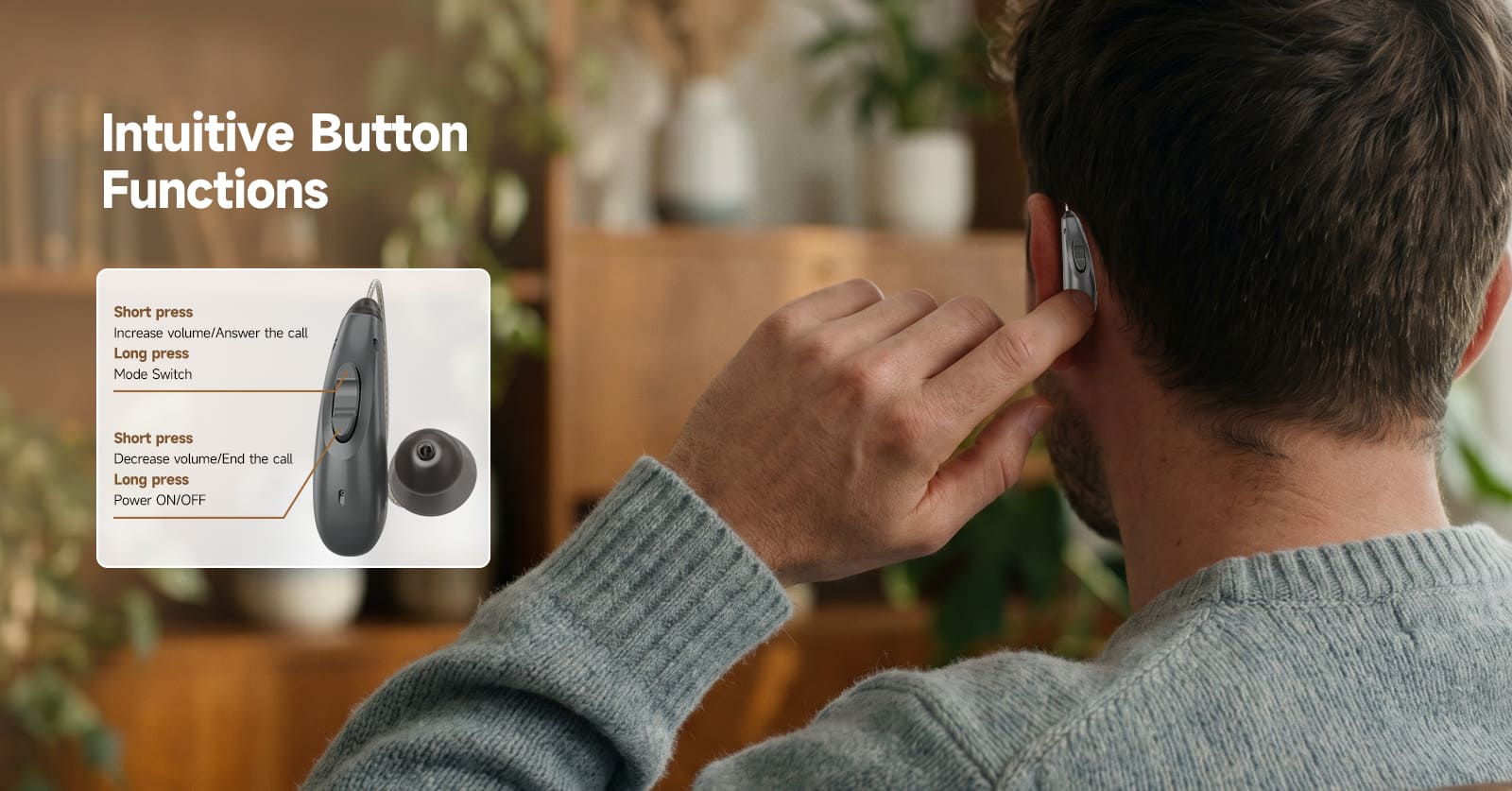
The TE201 hearing aid is suitable for moderate hearing loss and features large buttons, making it highly convenient for older adults who prefer to avoid complex operations.
Finally, how can you determine if a hearing aid's gain setting is appropriate?
Criterion 1: The sound feels natural and is not jarring.
If the sound becomes very sharp or piercing, it indicates that the gain is set too high.
Criterion 2: You can clearly understand conversations, rather than merely hearing sounds.
The key is "comprehension," not just "audition."
Criterion 3: You do not experience fatigue after wearing it for extended periods.
If you feel tired after wearing it for only a short while, the gain settings may be inappropriate.
Criterion 4: It adapts well to different environments.
The sound quality should be acceptable in both quiet and noisy settings.
In Summary:
When selecting over-the-counter hearing aids, you should consider various factors, including gain levels, device features, processing channels, underlying technology, ease of operation, and wearing comfort.

Comments
There are no customer reviews yet . Leave a Reply !
Leave a Reply