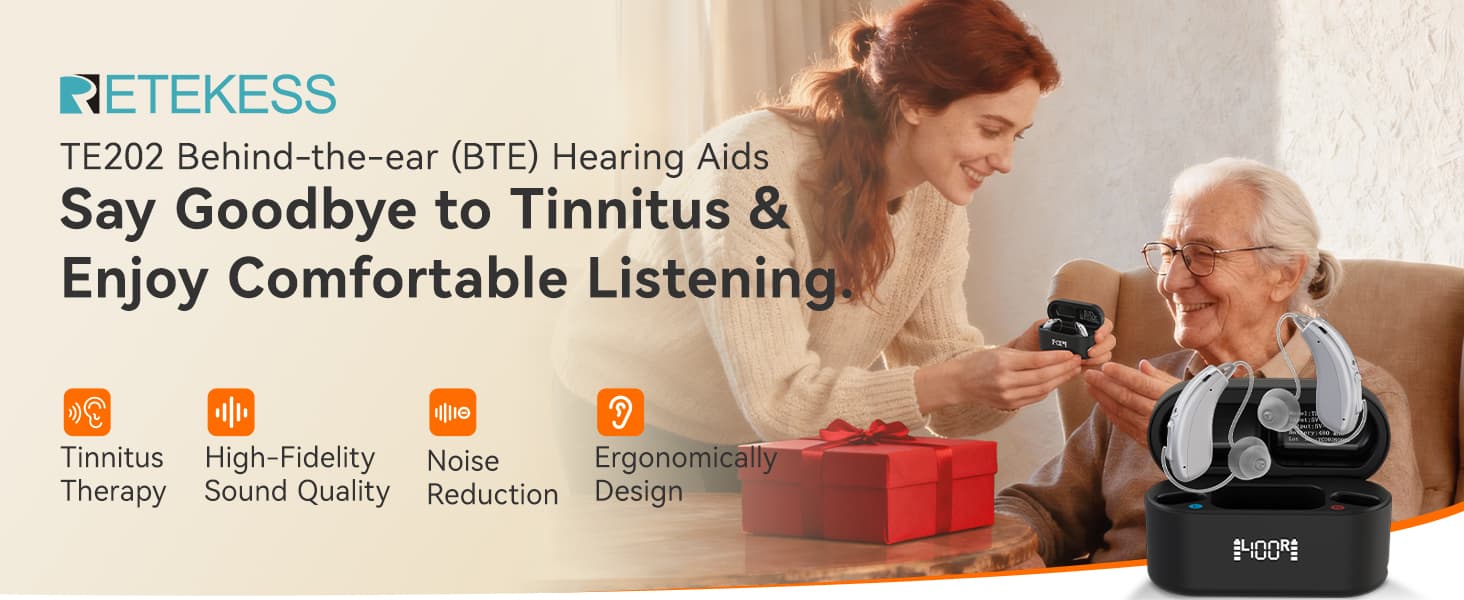
A Guide for Family Members: Key Considerations for Elderly Wearing Hearing Aids
When we notice that communicating with our elderly parents or relatives increasingly requires raising our voices, or they consistently turn the television volume up too high, it may signal that their hearing has begun to deteriorate. Many elderly individuals, due to concerns about stigma, the hassle, or simply not knowing how to choose, endure a world of muffled sounds in silence. A suitable, comfortable, and discreetly designed hearing aid, for an elderly person, is more like a practical gift for daily life—it eliminates the need for constant repetition in conversations, provides greater peace of mind when going out, and ensures they are no longer just sitting and smiling during family gatherings. More importantly, it helps them regain the confidence and joy of interacting with family and friends. This is not just about "hearing"; it is about emotional connection and an enhanced quality of life.
Key Facts to Know Before Wearing a Hearing Aid
When Should a Hearing Aid Be Worn?
Hearing loss varies in severity. You can use the simple chart below as a reference to assess the situation:
|
Classification |
Better Ear Hearing Level (dB) |
Hearing Experience in Quiet for Most Adults |
Hearing Experience in Noise for Most Adults |
|
Normal Hearing |
<20 dB |
No difficulty hearing sounds |
No or almost no difficulty hearing sounds |
|
Mild Loss |
20 to <35 dB |
No difficulty in conversation |
May have difficulty hearing speech |
|
Moderate Loss |
35 to <50 dB |
May have difficulty hearing conversation |
Difficulty in conversation |
|
Moderately Severe Loss |
50 to <65 dB |
Difficulty in conversation, can communicate normally when volume is increased |
Great difficulty with most conversation |
|
Severe Loss |
65 to <80 dB |
Misses most of conversation, even with raised volume |
Extreme difficulty participating in conversation |
|
Profound Loss |
80 to <95 dB |
Great difficulty hearing sounds |
Cannot hear conversational speech |
|
Complete Loss / Deafness |
≥95 dB |
Cannot hear speech or most environmental sounds |
Cannot hear speech or most environmental sounds |
|
Single-Sided Deafness |
Better ear <20 dB Poorer ear ≥35 dB |
Usually no issue unless sound is near the poorer ear. May have difficulty locating sound source. |
May experience difficulties with speech, conversation, and sound localization. |
How to Choose the Right Hearing Aid? Focus on These Key Points:
When taking an elderly relative for a hearing aid fitting, family members should assist by asking questions and observing. Remember these three essential aspects:
It Must Provide Clear Audibility
Especially for those with moderate to severe hearing loss, the hearing aid's amplification capability must be sufficient. For example, the Retekess TE202 Behind-The-Ear (BTE) Hearing Aid we recommend offers a peak gain of up to 45dB, ensuring adequate sound compensation to make daily conversations audible.
It Must Sound Comfortable and Natural
A good hearing aid doesn't simply amplify all sounds equally. It should intelligently identify environments—for instance, automatically reducing noisy background sounds in a market while emphasizing human speech. This relies primarily on digital chips and algorithms. For example, the smart chip and noise reduction engine built into the Retekess TE202 rapidly process sound, suppressing noise and sudden loud noises (like a door slam), protecting the ears and making sounds appear more authentic and comfortable. It also features up to 32 environmental analysis channels for more refined adaptation to different scenarios.
It Must Be Convenient and User-Friendly
- Ease of Use: Simplicity is paramount for the elderly. Behind-The-Ear (BTE) models typically have larger, easily adjustable buttons and are an excellent choice.
- Wearing Comfort: Choose a design that fits the ear snugly and feels stable and comfortable. The ergonomic, non-slip design of the Retekess TE202 BTE Hearing Aid ensures more secure and comfortable wear.
- Worry-Free Battery Life: As memory can be a concern for the elderly, choosing a model with long battery life is crucial. The Retekess TE202 BTE Hearing Aid, used with its charging case, offers up to 80 hours of battery life, eliminating the need for frequent charging and providing peace of mind when going out.
- Durability and Sturdiness: Daily life inevitably involves exposure to some moisture and dust, so water and dust resistance are important. The Retekess TE202 Hearing Aid boasts an IP65 rating for water and dust resistance, capable of handling everyday perspiration or light rain, making it more durable.
Be Patient and Supportive to Overcome the "Adaptation Period"
A new hearing aid, like a new pair of shoes, requires an adjustment period. The brain needs to relearn how to process sounds, which typically takes 1-3 months. Patience from family members is essential.
- Gradual Introduction Time-wise: Start by wearing the hearing aid for 1-2 hours per day, gradually increasing the duration.
- Gradual Introduction Environment-wise: Begin adapting in quiet home settings (like the living room or study), engaging in one-on-one conversations with family members at a slower, clearer pace. After about a week, try going outdoors to relatively quiet places (like a community garden). After approximately a month, gradually introduce more challenging environments like markets or family gatherings.
- Encourage Daily Training: Encourage the elderly to listen to news broadcasts with clear pronunciation or read newspapers aloud daily—these are excellent auditory rehabilitation exercises.
Assist in Developing Maintenance Habits for Long-Term Use
- Nightly: Batteries must be removed, and the hearing aid should be placed in a dedicated drying container. Regularly check if the desiccant needs replacing.
- Daily: Use the provided small brush to gently clean the device's body and the sound outlet of the ear tip (or ear mold) to prevent wax buildup.
- General Care: Avoid high temperatures and moisture (always remove before bathing or swimming), prevent drops, and keep out of reach of pets.
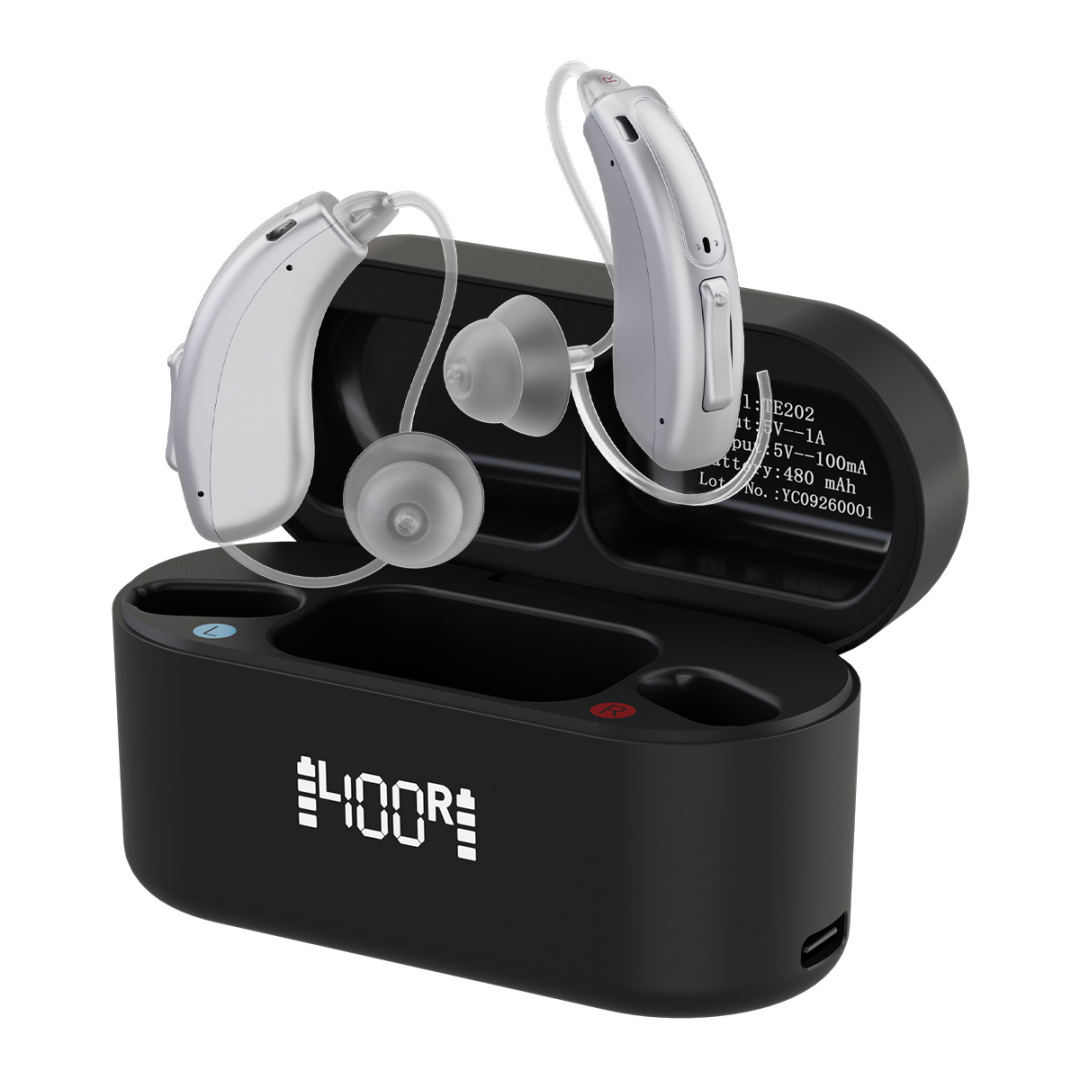
If you are considering such a gift for your parents, the Retekess TE202 Hearing Aid is an option worth considering:
- 45dB gain with intelligent noise reduction for natural, authentic sound.
- Behind-the-ear design with clearly marked, easy-to-operate buttons.
- Up to 80 hours of ultra-long battery life to eliminate frequent charging worries.
- IP65-rated protection to easily withstand everyday living environments.
Choose the Retekess TE202 BTE Hearing Aid to start your parents on a journey to clearer hearing.
Click the link below to learn more about the full features of the Retekess TE202 Hearing Aid >>>

Comments
There are no customer reviews yet . Leave a Reply !
Leave a Reply