
Beyond Noisy Environments: How Hearing Aid Noise Reduction Technology Actually Works
Tired of loud background noise drowning out conversations? Today’s advanced digital hearing aids rely on sophisticated noise reduction algorithms to separate human speech from unwanted ambient sound, transforming how people with hearing loss engage with the world. This guide breaks down the core noise reduction principles, designed for readers across North America and Europe who want to understand the tech behind clearer listening.
The Core Challenge: Distinguishing Speech from Noise
Human speech and environmental noise carry distinct acoustic signatures that digital processors can identify. Speech consists of fluctuating mid-frequency sound waves with natural pauses and rhythm. Background noise—wind, crowd chatter, machine hum, road traffic—tends to be steady, flat, or chaotic wide-frequency static. Older analog hearing aids lacked the computing power to tell these two apart, so they amplified everything together. Modern digital hearing aids use dedicated DSP chips to split incoming sound into dozens of independent frequency bands, analyzing each band in real time to judge whether the signal is speech or noise. This foundational process is called subband frequency analysis, the backbone of all effective noise reduction.
Four Main Noise Reduction Mechanisms Used in Modern Hearing Aids
- Adaptive Subband Noise Suppression
This is the most widely adopted core noise reduction technology across consumer and prescription hearing aids. The device splits audio into multiple narrow frequency channels. For every channel, the processor continuously calculates the ratio of speech signal to background noise. If a channel is dominated by irrelevant noise, the system automatically applies mild attenuation to lower its volume without touching frequency bands carrying human voices.
A key advantage of this adaptive design is balance. Unlike rigid static filters that muffle all soft sound, it adjusts second by second as your environment shifts—from a quiet living room to a busy supermarket. It avoids the unnatural “muffled voice” effect common in cheap amplifiers with fixed noise cutoffs.
- Wind Noise Suppression
Outdoor wind is a unique pain point for behind-the-ear hearing aids popular in Europe and North America. Wind rushing over microphones creates low-frequency turbulent static that masks speech. Wind suppression works by comparing signals captured by two separate microphones. Wind noise creates inconsistent, uncorrelated signals between the two mics, while human speech produces matching, synchronized waveforms. The processor detects uncorrelated turbulence signals and smooths them out, eliminating wind roar without distorting nearby conversation. - Transient Impulse Sound Blocking
Sudden sharp noises—car horns, slamming doors, fireworks, plate clangs—are a hidden hazard for hearing aid wearers. Since hearing aids amplify all incoming sound, these instantaneous loud bursts can spike far above the ear’s safe pain threshold, risking further permanent hearing damage.
Transient blocking algorithms use ultra-fast DSP processing to identify impact noise within milliseconds. The system temporarily caps the maximum output volume of these short, harsh sounds to a safe sound pressure level, while leaving normal speech amplification untouched. This technology is especially valuable for urban dwellers and seniors who frequent busy public spaces.
- Acoustic Feedback Suppression (Anti-Whistling Tech)
Though often categorized separately, feedback control is closely tied to noise reduction performance. High-pitched whistling occurs when amplified sound leaks out of the ear canal and re-enters the microphone, creating a looping noise signal. Traditional solutions simply lowered overall volume, which weakened speech clarity.
Modern adaptive feedback suppression uses echo cancellation logic. The chip predicts leaking sound waves and actively counteracts them before feedback forms, maintaining consistent amplification for voices without annoying squealing during movement, mask-wearing or loose ear tip fit.
Supporting Technology That Boosts Noise Reduction Performance
Noise reduction does not work alone; two complementary systems amplify its effectiveness for everyday users:
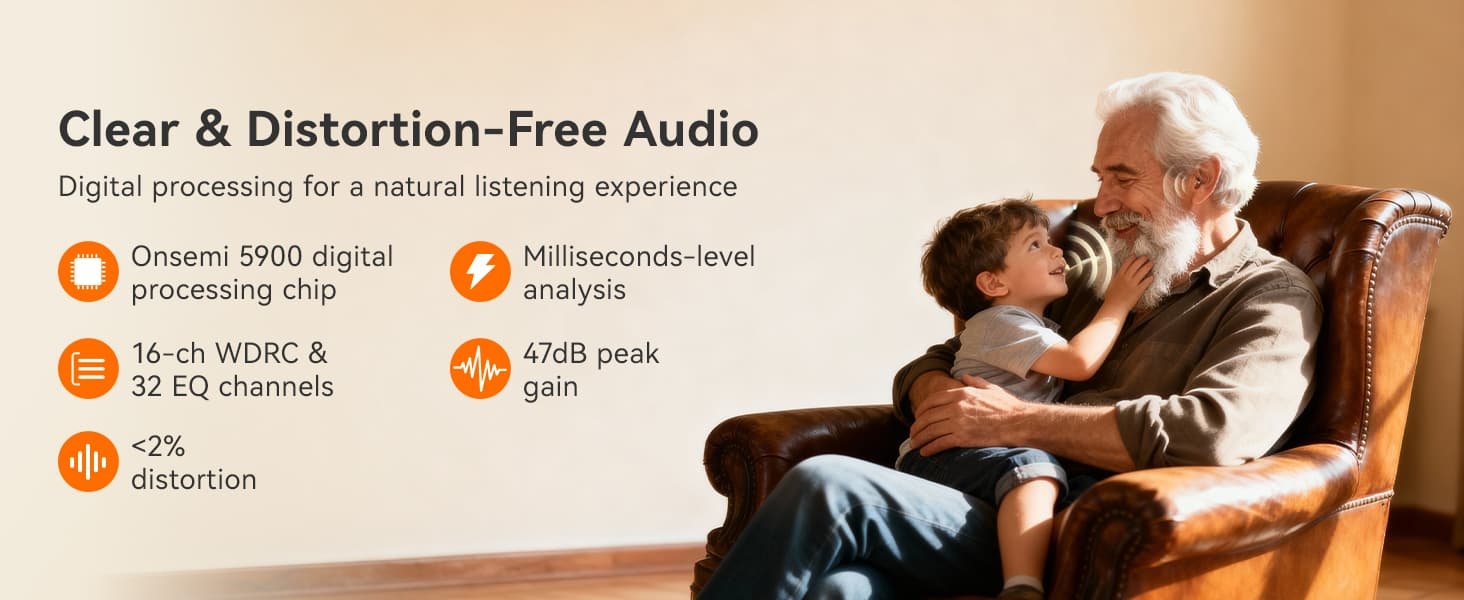
WDRC Wide Dynamic Range Compression: Human ears naturally soften loud sounds and boost quiet whispers. WDRC replicates this function digitally. It compresses extreme volume ranges so soft speech stays audible while loud background noise never becomes overwhelming, working hand-in-hand with noise suppression to deliver balanced listening.
Environment Detection Channels: Advanced hearing aids use independent analysis bands to classify surroundings—indoor quiet, restaurant chatter, outdoor traffic, windy open spaces. Once the environment is identified, the hearing aid automatically tweaks noise reduction strength, mic focus and compression settings for optimized performance without manual adjustment.
Why Noise Reduction Matters for European & American Hearing Aid Users
Daily lifestyles across North America and Europe create constant noisy scenarios: bustling city transit, open-plan restaurants, large family gatherings, cycling and hiking outdoors. Many first-time hearing aid users abandon their devices simply because unfiltered noise makes social interactions exhausting. Effective noise reduction eliminates this barrier. It restores the ability to follow conversations in public, reduces mental listening fatigue, and lets wearers participate in social activities without anxiety or strain.
Notably, OTC hearing aids widely available in the U.S. and many European countries now integrate multi-layer noise reduction once exclusive to high-end prescription models, making clear, noise-free listening accessible to more adults with mild to moderate hearing loss.
Final Thoughts
Noise reduction is far more than a single “filter” inside a hearing aid—it is a coordinated system of digital chips, multi-band analysis and targeted algorithms built to mimic natural human hearing. By separating speech from unwanted ambient sound, suppressing wind and sudden harsh noises, and eliminating disruptive feedback, this technology solves the biggest pain point of hearing aid ownership. As digital processing power advances, noise reduction systems will continue growing more precise, helping millions enjoy effortless, clear listening in every environment.

Comments
There are no customer reviews yet . Leave a Reply !
Leave a Reply