BTE Hearing Aid Problems Solved: 12 Issues Every New User Faces (And How to Fix Them)
Behind-the-ear (BTE) hearing aids are the most popular style worldwide for good reason: they work for almost every level of hearing loss, they are durable, they are easy to handle, and they hold a charge longer than smaller in-canal styles. But every new BTE user runs into the same set of problems in their first month. Most of these issues are not defects—they are normal parts of the learning curve, and you can fix almost all of them at home without a trip to the audiologist.
Problem 1: High-Pitched Whistling (Feedback)
That squealing, whistling sound is the most common complaint. It happens when amplified sound from the speaker leaks back to the microphone.
Fixes, in order:
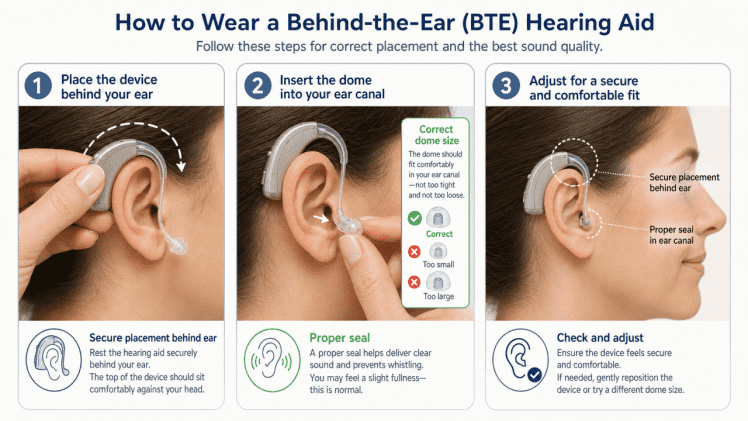
- Take it out and reinsert it.90% of feedback comes from an improperly seated dome. Pull your earlobe down and back while inserting to open the ear canal, then push the dome in until it seals comfortably.
- Try a larger dome.If the dome is too small, sound leaks around the edges. Your device came with multiple sizes—go up one size if you feel the dome is loose.
- Turn volume down slightly.Excess volume during the adjustment period increases feedback. You will not need as much volume as you think.
- Clean the sound outlet.Earwax buildup blocks sound, forcing it to reflect back. Brush the dome and tube opening with your cleaning brush.
- Move your hand away.Cupping your hand over your ear or holding a phone pressed directly to your ear causes feedback. This is normal, not a defect. Hold phones slightly away or use the phone program setting.
Modern BTEs like the Retekess TE202 include digital feedback cancellation that stops most whistling automatically, but a proper seal is still the most important factor.
Problem 2: The Device Feels Uncomfortable Behind My Ear
Something plastic sitting on your ear will feel noticeable at first. Most people adapt within 1-2 weeks.
Fixes:
- Start with 2-4 hours per day and build up. Do not try to wear them 12 hours on day one.
- Make sure the tube is the right length. Tubes that are too short pull on your ear; tubes that are too long flop around.
- Check that the device is not twisted behind your ear. The curve should follow the natural shape of your ear.
- Wipe the device and the skin behind your ear daily. Sweat and oil buildup can cause irritation.
- If soreness lasts more than two weeks, try different dome sizes or consult your provider.
Problem 3: My Own Voice Sounds Funny, Like I'm Talking in a Barrel
This is called the occlusion effect, and it happens to almost every new user. The sealed dome traps the bone-conducted sound of your own voice in your ear canal.
Fixes:
- Wait it out. 80% of users adapt to this within two weeks as their brain recalibrates.
- Try a more open dome. Open domes have vents that let low-frequency sound escape, reducing the echo effect.
- Read out loud for 10-15 minutes per day. This speeds up adaptation to the sound of your own voice.
- Resist the urge to turn volume down. That makes speech from others harder to hear while only partially fixing the occlusion effect.
Problem 4: Everything Is Too Loud
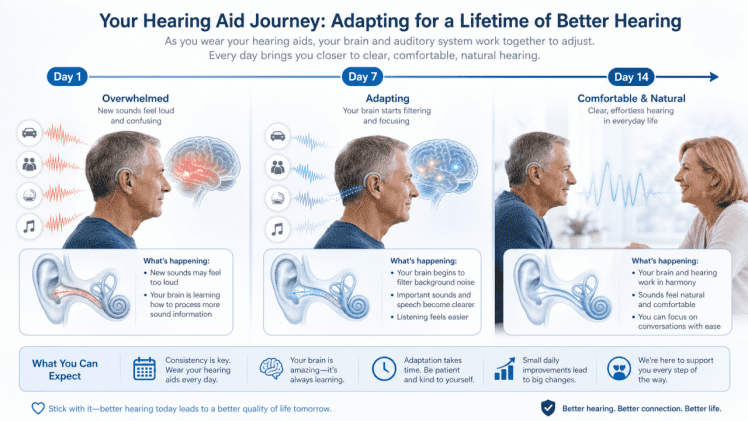
The refrigerator hums. Footsteps echo. Paper rustling sounds like crinkling metal. This is not a sign the device is broken—it is a sign it is working. Your brain has forgotten what these everyday sounds are like.
Fixes:
- Start at lower volume settings and work up.
- Wear them only in quiet rooms for the first 3-4 days.
- Increase wear time gradually.
- Give your brain time to filter these sounds out. It will—usually within 1-2 weeks.
- If harshness persists after a month, adjust the high-frequency settings or try a different program.
Devices with multiple noise reduction algorithms, like the Retekess TE202, smooth this transition significantly compared to basic amplifiers.
Problem 5: I Still Can't Hear in Restaurants
Speech-in-noise difficulty is the hardest thing to fix, even with premium hearing aids. People with normal hearing struggle in loud restaurants too.
Fixes:
- Position yourself with your back to the wall and face the person you are talking to.
- Choose tables away from kitchens, speakers, and large groups.
- Sit in booths or against soft surfaces that absorb sound. Avoid hard, echoey rooms.
- Use the noise/ restaurant program on your device if it has one.
- Do not expect perfection. This is the last thing to improve as your brain adapts, and it will still be challenging even after full adaptation.
Problem 6: The Device Falls Out Easily
If your BTE falls off when you move, talk, or chew, the fit is not right.
Fixes:
- Ensure the main body is tucked securely over the top of your ear, not just resting against it.
- Try a larger dome size for a better seal in the ear canal.
- Check that the tube is not too long or too short. The tube should follow the curve of your ear without tension.
- Consider a retention lock (the small plastic tail that tucks into the bowl of your ear) if your device includes one.
For glasses wearers: put your glasses on first, then position the hearing aid between your glasses arm and your head.
Problem 7: No Sound or Weak Sound
Your device was working fine and now it is quiet or dead.
Fixes:
- Check power.Make sure it is turned on and charged. For rechargeable models, place it back in the charger for 30 minutes.
- Check for wax.Earwax clogging the dome or sound tube is the #1 cause of weak sound. Brush the dome thoroughly and change it if wax is impacted.
- Check volume.It is easy to accidentally bump the volume control.
- Check the tube.On traditional BTEs, moisture or wax can get trapped in the thin tube. Remove the tube and blow it clear (or use the cleaning wire included with your device).
- Power cycle.Turn the device off, wait 10 seconds, then turn it back on.
Problem 8: Sound Is Distorted or Crackly
Distortion usually means one of three things: moisture, wax, or low battery.
Fixes:
- Open the battery door (for battery models) or leave the device in its charging case overnight to let moisture evaporate.
- Clean the microphone ports with a dry brush. Lotion, hairspray, or skin oil can clog microphones.
- Ensure the battery is fully charged. Low batteries cause distortion before they die completely.
- Avoid exposing devices to extreme humidity, hair products, or rain.
Problem 9: Itchy Ears
Itchiness is common when you first start wearing domes in your ear canals.
Fixes:
- Clean your domes daily with a dry cloth.
- Try a different dome material or size. Silicone allergies are rare, but some people are sensitive to certain materials.
- Do not push the dome in too deep. It only needs to seal the entrance of the ear canal, not go deep inside.
- Give your ears short breaks if itching is severe, but work up to consistent wear.
- Never stick cotton swabs in your ear canals—that pushes wax deeper and makes itching worse.
Problem 10: Batteries Die Too Fast
For rechargeable models, short battery life usually means the battery is not making proper contact in the charger.
Fixes:
- Wipe the charging contacts on both the device and charger with a dry cloth. Sweat and oil prevent proper charging.
- Make sure the device clicks into place in the charger and the charging light comes on.
- Turn devices off when you are not wearing them if you will go multiple days between uses.
- At full charge, modern BTEs like the Retekess TE202 run 162 hours. If you get significantly less, contact support.
For disposable battery users:
- Remove the sticker from zinc-air batteries 2 minutes before inserting to let them activate fully.
- Store batteries at room temperature, not in the refrigerator.
- Open the battery door at night to extend battery life.
Problem 11: I Can't Hear the TV Well
Even with hearing aids, television can be challenging because of compressed audio, background music, and actors mumbling.
Fixes:
- Enable closed captions. This is not cheating—it is how millions of people with normal hearing watch TV now too.
- Turn off "surround sound" or "enhanced audio" modes on your TV. These make dialogue harder to hear.
- Sit closer to the TV.
- Consider a TV listening device like the Retekess TA008 wireless TV headphone system, which sends clear audio directly to your ears without blaring volume for everyone else.
Problem 12: I Don't Know When to Change Programs
Most BTEs have 3-4 programs for different environments. You do not need to overthink this:
- Program 1 (Normal/Quiet):For home, one-on-one conversations, quiet offices. Use this most of the time.
- Program 2 (Noise/Restaurant):For groups, restaurants, public spaces. This setting reduces background noise more aggressively.
- Program 3 (Outdoor/Traffic):For walking outside, windy days. This reduces wind noise.
- Program 4 (Tinnitus/Music):For tinnitus masking or listening to music.
Start with Program 1 and only switch when you move to a clearly different environment. You will get a feel for when each setting helps.
Every single one of these issues is normal. The difference between people who successfully use hearing aids and people who abandon them in a drawer is persistence through this first month. The problems get better, your brain adapts, and the devices start to feel like a natural extension of your senses.

Comments
There are no customer reviews yet . Leave a Reply !
Leave a Reply