Hearing Aid Adaptation Guide: Wear Time, Habits & Essential Tips
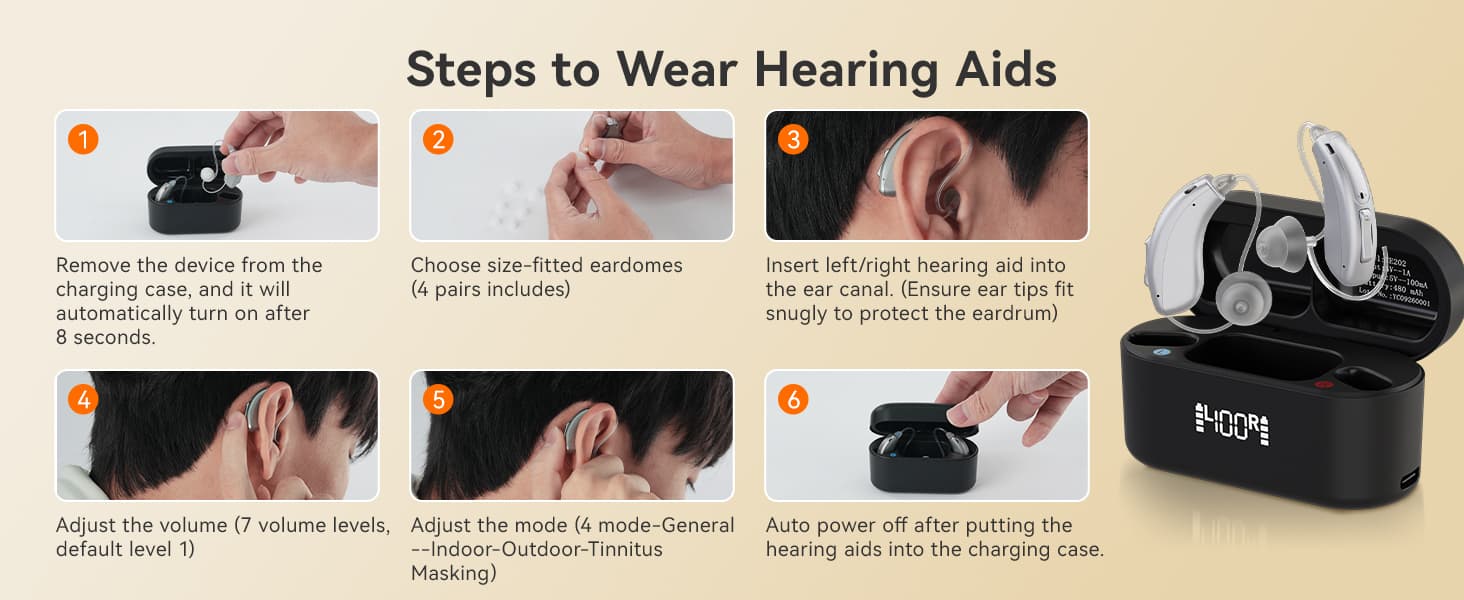
Many new hearing aid wearers feel uncomfortable after fitting and end up abandoning their devices. Unlike glasses that deliver instant clear vision, hearing aids require an adaptation period to retrain your brain to process sounds after long-term hearing loss. This guide shares a scientific 4-week wearing plan, practical habits and key tips to help you adapt smoothly with our Retekess TE202 BTE Hearing Aid.
1 Why Do New Hearing Aids Bring Discomfort?
All early discomfort is normal rather than equipment failure. After years of muted hearing, your brain gets used to faint, quiet sounds. When you put on hearing aids, countless ambient noises rush in and overwhelm your auditory system, creating common issues: noisy harsh sounds, ear fullness and itchiness, hollow echoing of your own voice, trouble separating speech from noise, and dizziness after long wear. These are typical signs of auditory reconstruction, and discomfort will fade gradually with proper use.
Week Progressive Adaptation Schedule
Do not wear hearing aids all day at the very beginning, as it leads to severe auditory fatigue. Follow this step-by-step routine for gentle adaptation.
Week 1: Quiet Indoor Training
Only wear at home for 1–3 hours split into short sessions. Get familiar with soft household sounds like running water and fridge hums to rebuild basic sound sensitivity. Take breaks immediately if your ears feel stuffed.
Week 2: Daily Speech Practice
Wear 3–5 hours at home and quiet residential areas, chatting slowly with family. Our Retekess TE202 BTE Hearing Aid simplifies this stage with four self-developed noise reduction algorithms. Multi-subband adaptive filtering highlights human voices while suppressing background clutter, and dynamic feedback cancellation eliminates annoying whistling for stable, smooth audio output. You will slowly get used to your own voice without heavy echoing.
Week 3: Mildly Noisy Scene Training
Extend daily wear to 5–8 hours in parks, supermarkets and small gatherings. This stage trains your brain to filter irrelevant noise. Equipped with an exclusive transient sound blocking engine, Retekess TE202 detects sudden loud noises such as car horns and slamming doors within 1ms and caps sound pressure at 70dB SPL to protect your ears. Its built-in wind noise suppression also optimizes outdoor listening experience.

Comments
There are no customer reviews yet . Leave a Reply !
Leave a Reply