Why Doctors Advise Early Hearing Aid Use Instead of "Waiting for It to Get Worse"
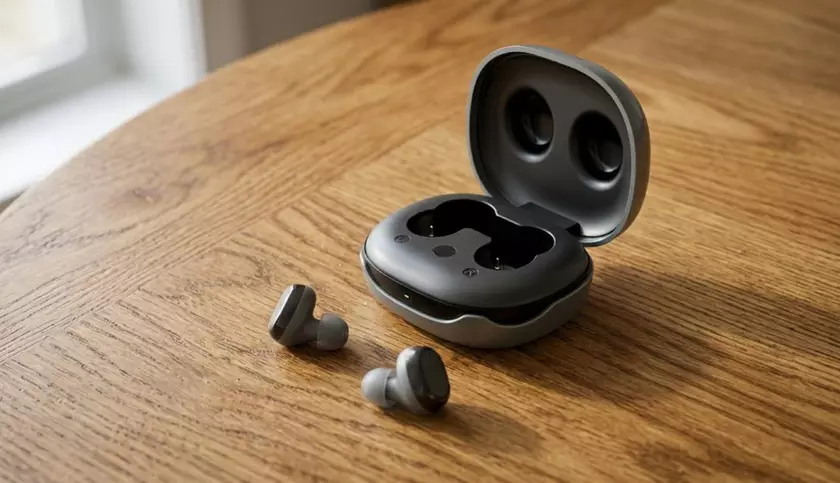
The hearing test report on the table shows "hearing aids" and suggests using a hearing aid, but you might be thinking of waiting, feeling that it’s not bad enough yet — this is often the initial reaction of many people. However, the repeated emphasis by doctors on “early intervention” stems from a widely underestimated truth: waiting for hearing aids for seniors to be needed often results in higher health costs and missed opportunities for effective rehabilitation.
The Cost of Waiting: It's Not Just About "Not Hearing Clearly"
Medical research has confirmed that untreated hearing loss has a systemic impact.
First Cost: A Hidden Attack on Brain Cognition
The prestigious medical journal The Lancet lists middle-aged hearing loss as the number one modifiable risk factor for Alzheimer’s disease (dementia). The logic is: when hearing is impaired, the brain must use far more cognitive resources to try to decipher fragmented sound signals. Being in this “overload” state for an extended period drains cognitive resources needed for memory and thinking, accelerating overall cognitive decline. A study from Johns Hopkins University quantifies this risk: people with moderate hearing loss are three times more likely to develop dementia than those with normal hearing. This neural damage is often irreversible.
Second Cost: The “Use It or Lose It” Principle for Hearing
Our hearing follows the “use it or lose it” principle. When hearing declines, fewer sound stimuli are transmitted to the brain, and the neural pathways responsible for hearing deteriorate due to lack of exercise, known as the "auditory deprivation effect." This accelerates further hearing loss. On the other hand, using a hearing aid early provides continuous, appropriate sound stimulation to preserve residual hearing, making it one of the most effective ways to protect remaining hearing.
Third Cost: Comprehensive Erosion of Quality of Life
Not hearing clearly can lead to fatigue and frustration in social interactions. Many people unconsciously avoid communication, falling into isolation and depression. At home, poor communication with family can lead to conflicts. More importantly, hearing loss brings safety risks — not hearing car horns, alarm bells, or family warnings significantly increases the risk of falls and accidents.
The Value of Early Use: Seizing the “Golden Window” for Intervention
Since the cost of waiting is so high, what unique value does “early use” offer?
The key lies in protecting the brain’s “plasticity.” In the early stages of hearing loss (usually mild to moderate), the brain’s auditory center and neural pathways are still functioning well. Wearing a hearing aid at this stage allows the brain to quickly understand and adapt to the amplified, clear sounds, re-establishing efficient auditory processing patterns. It’s like fertilizing the soil while it’s still fertile.
If delayed until severe hearing loss, the brain has been in a "sound famine" for a long time, and its ability to process sounds has seriously deteriorated. At this stage, wearing a hearing aid for seniors can result in the brain feeling overwhelmed by the incoming sounds, leading to a “hearing but not understanding” dilemma. The adaptation process will be lengthy and difficult, and the final effect will be significantly reduced. Therefore, the mild to moderate hearing loss stage is the “golden window” for the best and fastest adaptation to invisible hearing aid devices.
Scientific Action Guide: Four Steps to Overcome Misconceptions
If you or your loved ones experience the following symptoms, it's time to consider hearing tests and intervention:
- Difficulty concentrating on hearing:Struggling to follow conversations and missing greetings.
- Unconsciously increasing volume:Listening to TV or phone audio much louder than others.
- Frequently asking for repetition:Needing others to repeat themselves face-to-face or on the phone.
- Tinnitus or dizziness:This is often a key signal of inner ear issues.
Breaking the Misconceptions and Taking Action:
- Discard the “deaf” label:Modern hearing aids for seniors are intelligent devices that assist hearing, just like glasses help correct vision. Resisting them only accelerates hearing decline in silence.
- Seek professional fitting:Always go to a hospital or certified hearing center for comprehensive hearing testing and evaluation. Hearing aids must be precisely adjusted, just like prescription glasses, not just a simple “sound amplifier.”
- Be patient during the adaptation period:It takes 1-3 months to adjust to wearing hearing aids. Under the guidance of an audiologist, gradually transition from quiet to noisy environments, allowing the brain to relearn.
Act Now to Protect the Sounds You Cherish
Hearing aids, especially hearing aids for seniors, are not a sign of aging but a key to protecting hearing, preserving cognition, and connecting to a better life. When doctors recommend early use, they are not just concerned about your ears but are providing a crucial solution to protect your brain’s vitality and your quality of life. The best time to take action against hearing loss is always—right now.
Have you ever faced hearing issues for yourself or a loved one? Share your experience or questions in the comments below, and our experts will answer. Every moment of clear hearing is an active response to life. May you stay connected to the world with clarity.

Comments
There are no customer reviews yet . Leave a Reply !
Leave a Reply