Why is a Hearing Test so Important when Choosing a Hearing Aid
OTC hearing aids are legal, available, and more affordable than ever. So why bother with a hearing test? It is a fair question. If you can buy reading glasses without an eye exam, why not hearing aids without an audiogram?
The short answer: you can buy OTC devices without a test, and they will help many people. But getting a hearing test first makes you dramatically more likely to buy the right device, set it up correctly, and actually wear it instead of leaving it in a drawer. Here is exactly what a test tells you, why it matters, and when you absolutely cannot skip it.
What an Audiogram Actually Tells You
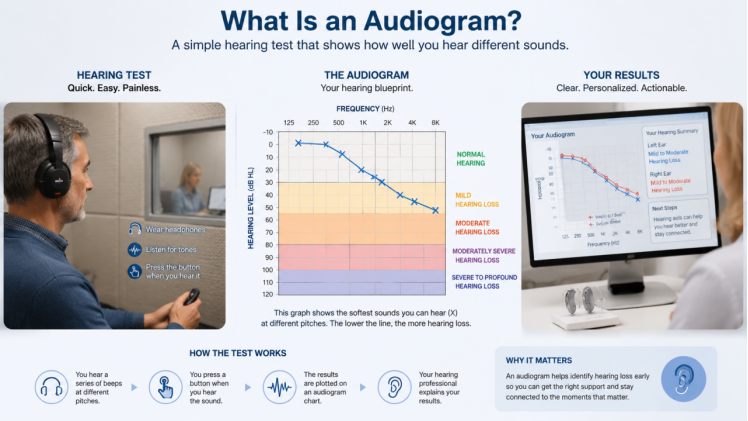
A hearing test produces an audiogram—a simple graph that shows exactly how well you hear different pitches at different volumes. It is not some complicated medical ritual designed to sell you expensive devices. It is a 30-minute, painless test that answers four critical questions:
1. What Kind of Hearing Loss Do You Have?
Not all hearing loss is the same, and not all of it is helped by hearing aids:
- Sensorineural loss: Damage to the inner ear hair cells or auditory nerve, from aging, noise, or certain medications. This is the most common type, and hearing aids work extremely well for it.
- Conductive loss: Sound cannot get through the outer or middle ear due to wax buildup, fluid, infection, or structural issues. This type is often medically treatable—sometimes as simply as having earwax removed. Hearing aids may not be needed at all.
- Mixed loss: Combination of both types.
If you have conductive loss from impacted wax and spend $500 on hearing aids, you wasted your money. A 10-minute ear exam during a hearing test would have caught that.
2. How Severe Is It, and In Which Frequencies?
Hearing loss is not a single number. You might have perfect low-frequency hearing but significant high-frequency loss. You might have mild loss in one ear and moderate loss in the other. You might have loss only in specific frequency ranges.
This matters because:
- OTC devices are designed for mild-to-moderate loss. If you have severe loss, OTC aids will not be powerful enough, and you will waste money on devices that cannot help you.
- Different loss patterns work better with different styles. High-frequency loss often works best with open-fit RIC devices. Flat loss across all frequencies may work better with BTE devices that provide more power.
- Asymmetrical loss (much worse in one ear) can be a sign of serious medical issues that need evaluation, not just amplification.
3. Are There Red Flags That Need a Doctor?
This is the most important reason to get tested, and the one no OTC purchase can catch. Certain hearing loss patterns indicate underlying medical conditions that require treatment beyond hearing aids:
- Hearing loss that is significantly worse in one ear
- Sudden hearing loss (over hours or days)
- Hearing loss with vertigo or balance issues
- Hearing loss with ear pain, drainage, or bleeding
- Hearing loss with pulsing tinnitus that matches your heartbeat
These can indicate acoustic neuroma (a benign tumor on the hearing nerve), Meniere's disease, ear infections, otosclerosis, or other treatable conditions. An audiologist will spot these patterns and refer you to an ENT doctor if needed. Skipping a test means missing these red flags.
4. What Settings Do You Actually Need?
Even the best self-fitting OTC device works better when you start with your actual hearing numbers. Self-fitting apps do a reasonable job, but they are not as accurate as a clinical audiogram. Starting with accurate thresholds means:
- Less time spent adjusting settings
- More natural sound from day one
- Less chance of over-amplifying frequencies you hear well (which causes discomfort and can damage remaining hearing)
- Faster adaptation
When You Can Reasonably Skip a Professional Test
Let us be realistic. Not everyone needs a full clinical audiogram before trying OTC devices. You can reasonably start with OTC aids first if:
- You are under 70 years old
- Your hearing loss developed gradually over years, not suddenly
- You have roughly the same difficulty in both ears
- You have no ear pain, drainage, vertigo, or tinnitus that pulses with your heartbeat
- You have mild-to-moderate difficulty (you can hear speech in quiet, struggle in noise)
- You try a reputable OTC brand with a good return policy
Even then, a baseline test is a good idea for future comparison.
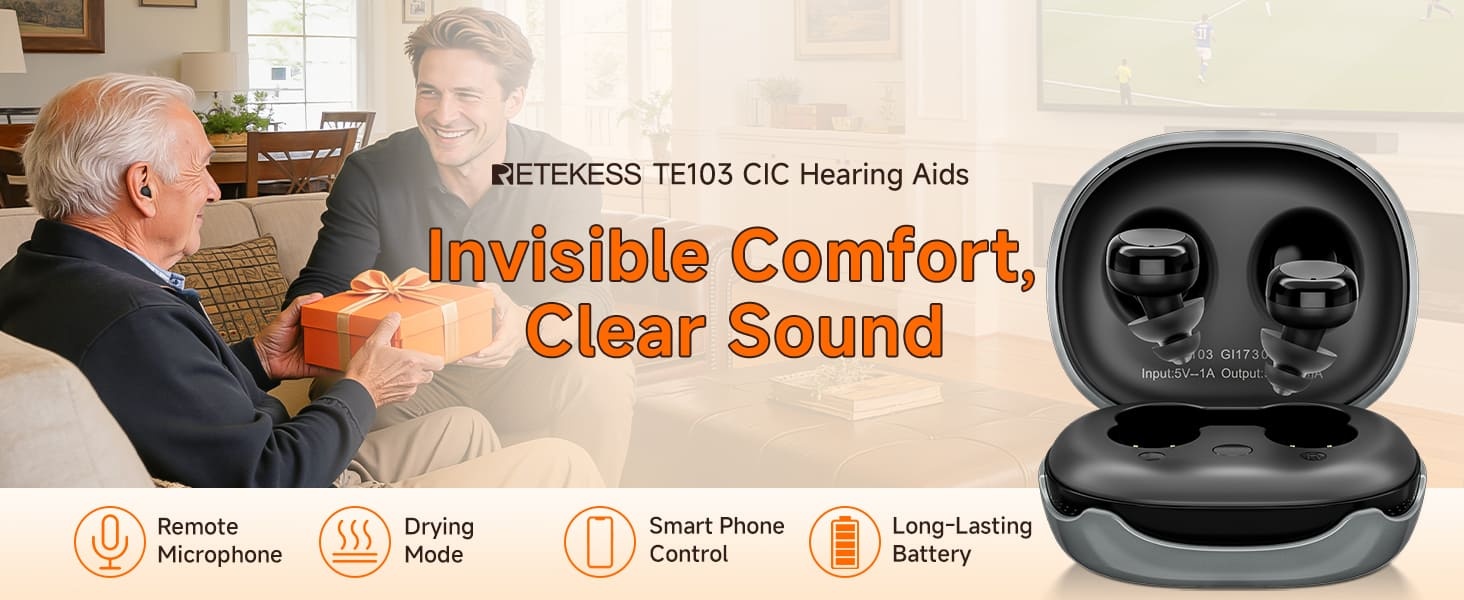
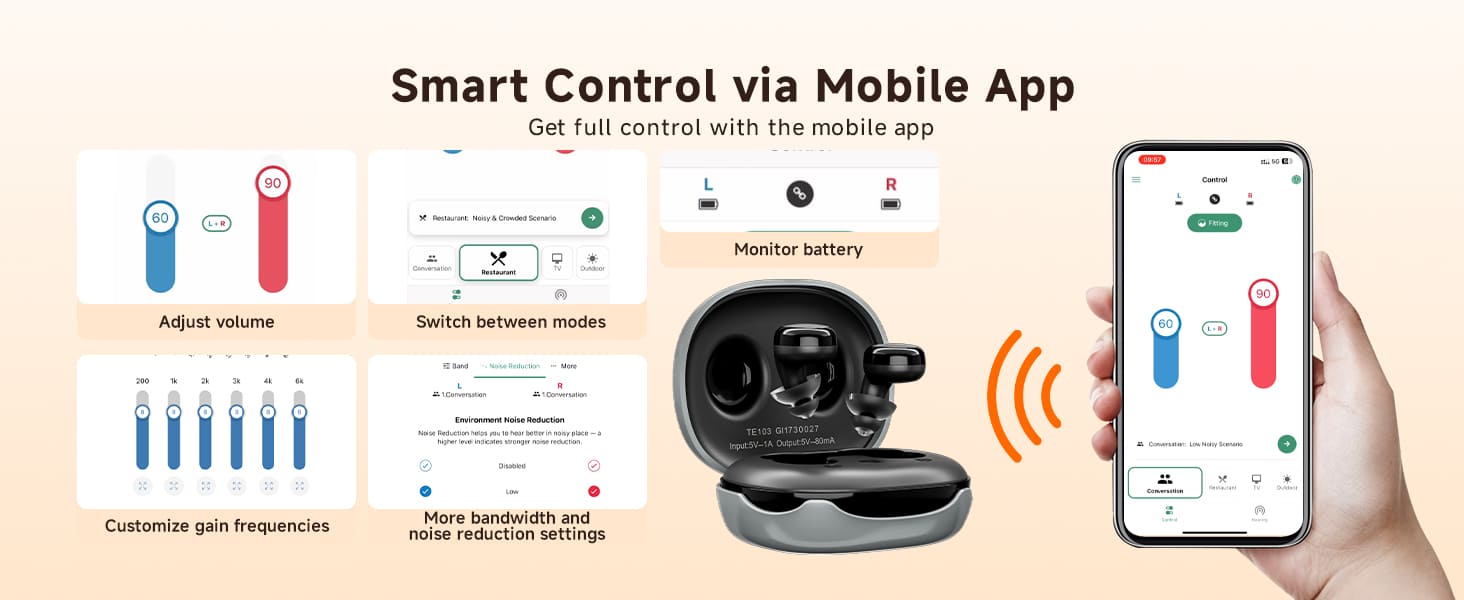
Self-fitting devices like the Retekess TE103 CIC include app-based hearing tests that establish baseline hearing levels for initial programming. These are not as comprehensive as clinical audiometry, but they provide a reasonable starting point for mild-to-moderate loss.

Comments
There are no customer reviews yet . Leave a Reply !
Leave a Reply